FB 10| imP | Molecular Plant Science | Wachter Lab
Research: JGU > Faculty of Biology >imP > Wachter Lab
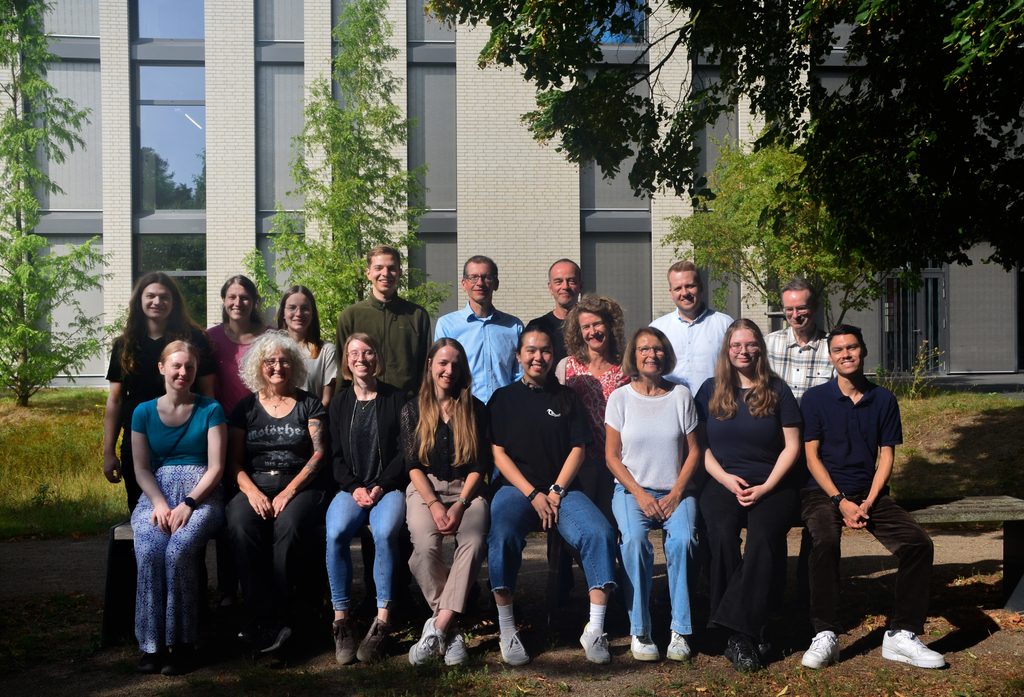
We are an international research group at the Institute for Molecular Physiology investigating the molecular mechanisms and biological functions of alternative RNA splicing in plants. We use a multidisciplinary approach that integrates molecular biology, RNA biochemistry, cell biology, and plant physiology, with Arabidopsis thaliana as the primary model system. We aim to better understand these processes and their importance for plant life.
Our research currently focuses on three major topics:
During early seedling development in darkness, plants undergo skotomorphogenesis (etiolation), a programme characterised by rapid hypocotyl elongation, the formation of an apical hook with closed cotyledons, and attenuated root growth. Exposure of etiolated seedlings to light triggers a swift switch to photomorphogenesis, enabling phototrophic growth through cotyledon opening, chlorophyll biosynthesis, and repression of hypocotyl elongation. This developmental transition is accompanied by extensive transcriptome reprogramming and widespread remodelling of alternative precursor mRNA splicing.
Work from our group and others has identified several splicing regulators that contribute to these light-dependent alternative splicing changes, uncovering a complex regulatory network with both auto- and cross-regulatory functions (Fig. 2A). Corresponding mutants exhibit defects in light-responsive alternative splicing and seedling development, highlighting the critical role of these proteins in this context.
Our current focus lies on the RS sub-family of serine/arginine-rich (SR) proteins, and we address two central questions: (i) How is specificity achieved among the four closely related RS proteins? (ii) What is the impact of phosphorylation and biomolecular condensation on splicing regulator function and light-dependent alternative splicing? (Fig. 2B). We tackle these questions through an integrated approach that combines in vitro assays to characterise the condensation behaviour of the RS proteins, in vivo experiments to resolve their subcellular localisation and alternative splicing functions, and physiological studies to assess the biological relevance of our findings for light-dependent development.
Further reading: Saile et al. (2025), Plant Physiology, 199(3), DOI: 10.1093/plphys/kiaf482
RNA can fold into highly dynamic and complex structures that encode functionality independent of the primary sequence. This inherent feature is also exploited by messenger RNAs, as exemplified by riboswitches – ligand-sensing domains within mRNAs that are employed for gene regulation. Early work on the thiamine pyrophosphate (TPP)-sensing riboswitch from plants revealed its function in alternative splicing control (Wachter et al., 2007). To investigate whether evolutionarily conserved mRNA structures play a more widespread role in plant alternative splicing, we established a bioinformatics search pipeline in collaboration with the group of Dr. Zasha Weinberg (University of Halle), followed by experimental testing of promising candidates such as the 45abc motif (Reinhardt et al., 2026) and the DEAD motif (Burgardt et al., 2026). Both motifs control alternative splicing in a structure-dependent manner and contribute to auto- and cross-regulation of the corresponding genes. Notably, overriding this regulatory mechanism by inducible expression of a DEAD-box helicase caused massive increases in cassette exon skipping and intron retention, suggesting an important role of RNA structures within the respective precursor mRNAs in alternative splicing regulation (Fig. 3). In our ongoing work, we examine the interplay between this helicase and splicing regulators in splice site choice and dissect the specific splicing-regulatory features of the DEAD-controlled helicases themselves.
In addition to intramolecular RNA structures, we investigate the potential role of RNA/DNA hybrids, so-called R-loops, in plant gene regulation as part of the 4R Research Training Group (https://4r-rtg.de/). Global profiling of R-loops by DRIP-seq (DNA:RNA immunoprecipitation followed by sequencing) alongside transcriptome-wide analysis of alternative splicing via RNA-seq will test for their co-occurrence in the context of light-triggered seedling responses. Furthermore, mutants with altered expression of R-loop-processing factors will be examined for potential changes in splicing and development.
Further reading: Reinhardt et al. (2026), The Plant Journal, DOI: 10.1111/tpj.71060
Association of trans-acting factors, such as splicing-regulatory proteins, with the precursor mRNA can alter the splicing outcome through various mechanisms – for example, by masking or promoting splice sites. The impact of splicing regulators on splice site choice can be highly dependent on their relative binding position. We previously demonstrated this for Polypyrimidine Tract Binding proteins (PTBs) from Arabidopsis thaliana: PTB binding upstream of a facultative cassette exon caused its skipping, whereas recruitment to intronic positions in close proximity but downstream of the cassette exon resulted in its inclusion (Fig. 4).
In our ongoing research, we aim to expand our understanding of the plant splicing code; specifically, how RNA/protein interactions contribute to defined alternative splicing outputs. To profile these interactions, we established an RNA editing-based approach in a transient assay (Loeser et al., 2024) and are currently extending it to stable mutant lines. Complementary transcriptome-wide data are generated by iCLIP (individual-nucleotide resolution cross-linking and immunoprecipitation).
Combining these datasets with global profiling of alternative splicing in mutants exhibiting altered levels of splicing regulators, together with splicing reporter studies to test the impact of individual cis-regulatory motifs, will reveal the functional impact of RNA/protein interactions on alternative splicing outcomes and provide deeper insight into the plant splicing code. This understanding is a prerequisite for deciphering the molecular principles underlying highly dynamic splicing outputs and for modulating splicing decisions to define their biological implications and potential impact on agriculturally relevant traits.
Further reading: Loeser et al. (2024), Plant Molecular Biology, 114(2), DOI: 10.1007/s11103-024-01414-3
We offer courses for B.Sc., B.Ed., M.Sc. and M.Ed. students in Biology and related fields. The list below is organized by study programme and degree type. All courses are offered in both winter and summer term, unless stated otherwise.
Courses marked with an asterisk (*) have English as the primary language of instruction.
- Modul 11: Pflanzenphysiologie und Biochemie. Vorlesung & Übung.
- Modul 13/14B: Pflanzliche RNA Biologie: Vorlesung, Übung, Seminar* (only in summer term).
- Modul 15: Projektarbeit. Übung & Seminar.
- Modul 16: B.Sc.-Arbeit.
Die Vorlesung zum Modul Pflanzenphysiologie und Biochemie kann in den Studiengängen B.Sc. Molekulare Biotechnologie und B.Sc./M.Sc. Biomedizinische Chemie belegt werden.
- Modul 7: Pflanzenphysiologie und Biochemie. Vorlesung & Übung.
- Modul 16: B.Ed.-Arbeit.
- Modul 13a: Molekulare Pflanzenwissenschaft I. Vorlesung, Übung, Seminar* (only in winter term).
- Modul 13b: Molekulare Pflanzenwissenschaft II. Übung & Teilnahme am AG-Seminar* (only in winter term).
- Modul 18: Projektarbeit. Übung & Seminar.
- Modul 19: M.Sc.-Arbeit.
- Modul 19: M.Ed.-Arbeit.
A list of BSc and MSc theses supervised in our research group at the JGU Mainz is provided below. For inquiries about available topics, please send an email request (wachter@uni-mainz.de).
Completed projects
Clara Tigl. Functional Analysis of RNase H1A via Transient Expression in Nicotiana
benthamiana and Quantification of Global R-loop Levels. BSc thesis (09/2026).
Helena Warneke. RNA-Dependent in vitro Condensation Behaviour
of RS31a and RS31. BSc thesis (08/2026).
Denise Wilke. Investigating the interaction between the kinase SRPK4 and plant-specific RS proteins. BSc thesis (07/2026).
Lana Finkenauer. Applying HyperTRIBE to plant polypyrimidine tract-binding proteins. BSc thesis (05/2026).
Emil Austmeyer. Alternative Splicing Functions of RS31 Examined via a GRP8 Splicing Reporter and Putative RNA Binding Site Mutants. BSc thesis (05/2026).
Johanna Mann. Investigation of the in vitro condensation behavior of the plant-specifi c proteins RS31a and RS31 depending on their differently structured domains. BSc thesis (04/2026).
Linus Nuppnau. Investigating the interaction between plant specific RS proteins and upstream regulatory kinases. MSc thesis (02/2026).
Milena S. Ecker. Effects of UV Light on Alternative Splicing in Arabidopsis thaliana. BSc thesis (08/2025).
Nina Borges. Applying HyperTRIBE to plant polypyrimidine tract-binding proteins. BSc thesis (08/2025).
Franziska Fuchslocher. Investigating the interaction between the kinase AFC2 and plant specific RS proteins. BSc thesis (07/2025).
Merle M. Remmers. Assembly of RS modules into chimeric RS proteins and their impact on alternative splicing and their intranuclear distribution. BSc thesis (07/2025).
Miriam E. Berneiser. Probing the proteolytic activity of TEV by substrate mutants close to the cleavage site and evaluation of their general applicability by exchanging fusion protein modules. BSc thesis (06/2025).
Paul V. Rihm. Screening for possible RS31 & RS41 protein interactors via proximity labeling in Arabidopsis thaliana. MEd thesis (05/2025).
Moritz Constantin Hardt. The impact of RS41 charge pattern on in vitro solubility properties and on alternative splicing of a reporter in transient expression assay. BSc thesis (09/2024).
Lara Cronhardt-Lück-Gießen. Investigation of RS41 function in Arabidopsis thaliana. BSc thesis (08/2024).
Natalie Rupp. Feedback regulation of an RNA helicase transcript via a structured RNA motif. BSc thesis (08/2024).
Clara Olshausen. Alternative splicing of RBP45 precursor mRNAs is linked to the structured mRNA motif 45ABC. BSc thesis (05/2024).
Philipp Berg. The Role of the Evolutionarily Conserved and Structured mRNA Motif DEAD in Alternative Splicing Regulation. MSc thesis (11/2023).
Anna-Lena Schäfer. Alternative splicing activity of RS41-protein variants in transient expression (N. benthamiana) and generation of stable transformants (A. thaliana). MSc thesis (10/2023).
Alissa Bocanegra Petry. Golden Gate Cloning of RS41 variants, their impact on alternative splicing of a reporter and their localization as monitored by transient expression in N. benthamiana and confocal fluorescence microscopy. BSc thesis (09/2023).
Celine Denrath. Alternative splicing of RBP45 precursor mRNAs is linked to the structured mRNA motif 45ABC. BSc thesis (09/2023).
Patrick Lederer. Characterization of rs higher order mutants in their photomorphogenic response. BSc thesis (05/2023).
Dogan C. Kalay. Functional analysis of the PIKK family members on plant nonsense-mediated mRNA-decay. MSc thesis (01/2023).
Cynthia B. Müller. Regulation of the salinity stress response through nonsense-mediated mRNA Decay (NMD) associated with the degradation of NMD factors in Arabidopsis thaliana. BSc thesis (10/2022).
Larissa C. Grütz. Transient expression of new RS41 variants in N. benthamiana and their impact on alternative splicing of a RS31 reporter. BSc thesis (09/2022).
Julia S. Bauer. Auto- and crossregulation of the RNA helicase gene DRH1 in Arabidopsis thaliana. BSc thesis (08/2022).
Anne Schmidt. Untersuchung des gelelektrophoretischen Laufverhaltens von RS-Proteinen mittels Klonierung und immunologischem Nachweis von HA-Tag-Varianten. BSc thesis (02/2022).
Moritz P. Denecke. Proximity Labelling for the identification of RS protein interactors in planta. MSc thesis (11/2021).
Laura S. Schütz. Establishment of proximity labeling to identify RS protein interaction partners in planta. BSc thesis (05/2021).
Leonhard T. Thews. Construction, expression and biophysical analysis of recombinant RS-proteins from Arabidopsis thaliana. BSc thesis (04/2021).
Jens C. Mülders. The role of novel structured mRNA motif 3126-1 in plant alternative splicing control. BSc thesis (03/2021).
Dogan C. Kalay. Rekombinante Expression und Aufreinigung von pflanzlichen RS-Proteinen. BSc thesis (11/2020).
Verena Schneider. Examining the influence of localisation sequences on PTB2-TRIBE activity. BSc thesis (10/2020).
Marc Gebauer. Alternative splicing control of the RNA helicase gene DRH1 in Arabidopsis thaliana. BSc thesis (10/2020).
Maren Reinhardt. Characterization of new non-coding RNA classes in plant alternative splicing control. MSc thesis (08/2020).
Katarina O. Erbstein. Role of SnRK1 as energy sensor during plant development. BSc thesis (03/2020).
Kim N. Janßen. Examining the Cellular Site of PTB-Target RNA Interactions via Plant TRIBE. BSc thesis (02/2020).
Moritz P. Denecke. Photomorphogenesis response in splicing regulator mutants. BSc thesis (10/2019).
Kevin Rockenbach. Identification of PTB2 targets via Plant-TRIBE. BSc thesis (09/2019).
Für die Ausstellung einer Leistungsbescheinigung für das BAföG-Amt sind das vorausgefüllte Formblatt 5 sowie eine aktuelle Bescheinigung der Studienleistungen gemäß § 48 BAföG (kein Transcript of Records) an sek-aw@uni-mainz.de zu senden. Die Bescheinigung der Studienleistungen ist beim Studienbüro erhältlich.